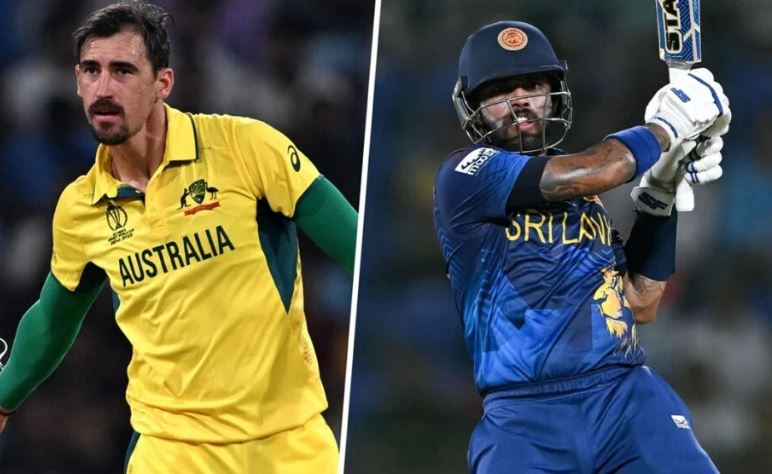
The cricket rivalry between Australia and Sri Lanka has evolved into a fascinating story of dominance, resilience, and transformation across decades. From their earliest encounters, Australia’s aggressive pace attack and deep batting lineup often set the tone, making life difficult for Sri Lankan batters. However, Sri Lanka gradually built their identity through fearless batting, world-class spin bowling, and unforgettable performances on big stages. Over time, this matchup shifted from one-sided contests to more competitive battles, especially in ICC tournaments and subcontinent conditions. The Australia National Cricket Team Vs Sri Lanka National Cricket Team Standings reflect not just results, but the changing balance of skill, strategy, and mental strength in international cricket history.
Recent Matches Table
Match
Date
Venue
Format
Winner
Score 1
Score 2
Match 1
16 February 2026
Kandy
T20I
Sri Lanka
Australia 181
Sri Lanka 184/2
Match 2
25 October 2024
Colombo
ODI
Sri Lanka
Australia 252
Sri Lanka 253/6
Match 3
23 October 2024
Colombo
ODI
Australia
Sri Lanka 212
Australia 215/3
Match 4
20 October 2024
Dambulla
ODI
Sri Lanka
Australia 198
Sri Lanka 202/4
Match 5
16 October 2023
Lucknow
ODI
Australia
Sri Lanka 209
Australia 215/5
Match 6
25 October 2022
Perth
T20I
Australia
Sri Lanka 157/6
Australia 158/3
Match 7
11 July 2022
Galle
Test
Sri Lanka
Australia 364
Sri Lanka 554
Team Statistics Summary Table
Team
Played
Won
Lost
Tied
No Result
Win %
Australia Test
33
21
5
0
7
63.63
Sri Lanka Test
33
5
21
0
7
15.15
Australia ODI
104
64
36
0
4
61.53
Sri Lanka ODI
104
36
64
0
4
34.61
Australia T20I
27
15
11
1
0
55.55
Sri Lanka T20I
27
11
15
1
0
40.74
Total Combined
164
100
52
2
10
60.97
Individual Batting Records Table
Player
Team
Innings
Runs
Highest
Average
Strike Rate
Pathum Nissanka
Sri Lanka
1
100
100
100.00
192.30
Travis Head
Australia
1
56
56
56.00
193.10
Mitchell Marsh
Australia
1
54
54
54.00
200.00
Kusal Mendis
Sri Lanka
1
51
51
51.00
134.21
Josh Inglis
Australia
1
27
27
27.00
122.72
Glenn Maxwell
Australia
1
22
22
22.00
146.66
Charith Asalanka
Sri Lanka
1
28
28
28.00
186.66
Individual Bowling Records Table
Bowler
Team
Overs
Maidens
Runs
Wickets
Economy
Dushan Hemantha
Sri Lanka
4.0
0
37
3
9.25
Dushmantha Chameera
Sri Lanka
4.0
0
36
2
9.00
Dunith Wellalage
Sri Lanka
3.0
0
24
1
8.00
Maheesh Theekshana
Sri Lanka
4.0
0
32
1
8.00
Kamindu Mendis
Sri Lanka
2.0
0
21
1
10.50
Marcus Stoinis
Australia
4.0
0
46
2
11.50
Glenn Maxwell
Australia
2.0
0
16
0
8.00
Early Encounters: A One-Sided Beginning in World Cricket
Australia and Sri Lanka first crossed paths in international cricket during a period where experience, pace, and discipline heavily favored the Australian side. The early matches reflected a clear imbalance, with Australia controlling most phases of the game through aggressive fast bowling and deep batting strength. Sri Lanka, still developing its international identity, often struggled to survive long innings against relentless pressure. However, these encounters also gave Sri Lanka valuable exposure to top-tier competition. Even in defeat, small moments of resistance began to appear, especially from the middle order. Australia used these games to reinforce their dominance in world cricket, while Sri Lanka quietly learned how to adapt. Over time, these early contests laid the foundation for a rivalry that would slowly grow in intensity and competitiveness, especially when conditions shifted in Sri Lanka’s favor.
Category
Australia
Sri Lanka
Match Trend
Key Observation
Batting Strength
High consistency
Developing phase
One-sided
Australia dominance
Bowling Attack
Fast and aggressive
Spin developing
Uneven
Pace advantage
Experience Level
Very high
Limited
Australia controlled
Learning curve
Match Control
Strong
Weak
Predictable
Australia dominant
The Rise of Sri Lanka: Challenging the Giants
Sri Lanka’s cricket journey changed dramatically after their breakthrough era in the mid-1990s. The team transformed from underdogs into a fearless unit capable of challenging even the strongest opponents. Their aggressive batting approach at the top, combined with intelligent spin bowling, began to trouble Australia in certain conditions. Players brought a new sense of confidence, no longer intimidated by reputation alone. Matches started becoming more competitive, especially in limited-overs formats. Australia still held an upper hand, but Sri Lanka’s improvement was undeniable. This phase marked the beginning of a more balanced rivalry, where momentum could shift within a single session. Fans began to witness closer finishes, unexpected collapses, and moments where Sri Lanka genuinely outplayed Australia. The psychological gap was shrinking, even if the results still favored Australia in many series.
Phase
Australia Form
Sri Lanka Growth
Match Balance
Key Shift
Early Rise
Dominant
Weak
One-sided
Experience gap
Transition
Strong
Improving
Competitive
Batting aggression
Breakthrough
Consistent
Confident
Balanced
Tactical change
Modern Shift
Stable
Developing
Mixed
Reduced gap
Australia’s Golden Era Pressure Battles
During Australia’s golden era, the team operated at an almost unmatched level of consistency. Their batting lineup was stacked with world-class performers, while their bowling attack applied constant pressure from both ends. Against Sri Lanka, this meant long spells of survival for opposition batters. However, Sri Lanka occasionally produced resistance through disciplined partnerships and spin mastery. These matches were not always easy wins for Australia, even if the scoreboard suggested control. Sri Lankan players learned to survive against elite bowlers like McGrath and Warne, which strengthened their long-term development. The contests became a test of mental strength as much as skill. Australia’s ability to close games remained superior, but Sri Lanka’s resilience ensured that matches were no longer predictable walkovers.
Aspect
Australia Performance
Sri Lanka Response
Match Style
Key Factor
Batting Depth
Elite
Moderate
Controlled
Top order strength
Bowling Pressure
High
Adaptive
Tactical
Spin vs pace
Fielding
Sharp
Improving
Competitive
Fitness gap
Match Outcome
Consistent wins
Occasional fight
Australia edge
Experience
Defining World Cup Clashes That Changed Perception
World Cup encounters between Australia and Sri Lanka brought a different level of intensity. These matches were played under global pressure, where every mistake carried massive consequences. Australia often entered as favorites due to their tournament pedigree, while Sri Lanka relied on unpredictability and momentum shifts. Some matches became iconic for their turning points, especially when Sri Lanka challenged Australia’s dominance in key phases. Australia, however, consistently showed knockout strength, often recovering under pressure. These clashes shaped how the world viewed both teams in ICC standings. Sri Lanka gained respect for their fighting spirit, while Australia reinforced their reputation as big-match performers. The rivalry reached a new emotional peak during these tournaments, where fans witnessed dramatic swings and unforgettable cricket moments.
Tournament
Winner Trend
Pressure Level
Key Moment
Impact
1996 World Cup
Sri Lanka rise
High
Batting surge
Historic shift
2007 World Cup
Australia dominance
Very high
Final control
Legacy boost
2011 World Cup
Australia edge
High
Middle overs control
Tactical win
2015 World Cup
Australia strong
Very high
Knockout dominance
Title impact
Spin Versus Pace Tactical Identity War
The tactical battle between spin and pace has always defined encounters between these two teams. Sri Lanka traditionally relied on spin bowling, especially in home conditions where the ball turned sharply and tested Australian technique. On the other hand, Australia built their dominance on raw pace, bounce, and aggressive seam movement. This contrast created fascinating matchups where conditions played a crucial role in deciding outcomes. In Sri Lanka, Australian batters often struggled against spin variations, while in Australia, Sri Lankan batters faced relentless pace attacks. Over time, both teams adapted by developing more versatile squads. Spin became more strategic for Sri Lanka, while Australia improved their ability to play spin. This tactical evolution made modern contests more balanced and unpredictable.
Condition
Advantage Team
Bowling Impact
Batting Challenge
Match Result Pattern
Australia pitches
Australia
Pace dominance
Spin handling
Home control
Sri Lanka pitches
Sri Lanka
Spin impact
Pace struggle
Home advantage
Neutral venues
Balanced
Mixed attack
Adaptability
Close contests
T20 format
Slight Australia
Power bowling
Fast scoring
Variable
Modern Era Shifts and Declining Gap
In the modern era, the gap between Australia and Sri Lanka has become more structured but less extreme. Australia continues to maintain strong performances across formats, supported by a stable domestic system and world-class player development. Sri Lanka, however, has entered a rebuilding phase, focusing on young talent and long-term consistency. Matches are still competitive at times, but Australia generally holds the upper hand in execution. The influence of franchise cricket has also changed playing styles, with more aggressive batting and innovative bowling strategies appearing in both teams. While Australia remains a top-tier side in global standings, Sri Lanka is gradually rebuilding its competitive edge. The rivalry is no longer one-sided, but it is also not fully balanced yet.
Era
Australia Strength
Sri Lanka Status
Match Nature
Key Trend
Early Modern
Strong
Rebuilding
One-sided
Transition phase
Mid Phase
Stable
Developing
Competitive
Skill gap narrowing
Recent Years
Elite
Inconsistent
Mixed results
Experience difference
Current Phase
Dominant
Emerging
Unpredictable
Growth phase
Standout Player Rivalries Across Generations
Over the years, several player battles have defined this rivalry. Australian legends like Ricky Ponting and Glenn McGrath often clashed with Sri Lankan greats such as Sangakkara and Jayawardene. These contests were not just about runs and wickets but about psychological pressure and tactical execution. In limited-overs cricket, aggressive Australian batters tested Sri Lankan bowling depth, while Sri Lankan batters relied on timing and patience. In modern times, fast bowlers like Mitchell Starc have continued the tradition of high-intensity encounters. Each generation has added new layers to the rivalry, making it more complex and unpredictable. These individual battles often decided the direction of entire series.
Player Type
Australia Example
Sri Lanka Example
Match Impact
Key Battle Area
Batting Star
Ricky Ponting
Kumar Sangakkara
High influence
Middle order
Bowling Star
Glenn McGrath
Muralitharan
Match defining
Strike bowling
Modern Batter
David Warner
Kusal Perera
Aggressive starts
Powerplay
Fast Bowler
Mitchell Starc
Lasith Malinga
Death overs
Pressure moments
Conclusion
The journey of Australia and Sri Lanka in international cricket highlights how rivalries evolve beyond just numbers on a scorecard. Australia’s consistency, discipline, and big-match temperament have kept them ahead in most standings, while Sri Lanka’s golden generation brought moments of brilliance that reshaped expectations. Each era added new chapters filled with iconic performances, tactical battles, and emotional turning points. Whether it was World Cup clashes or bilateral series, both teams contributed to a rich cricketing narrative. In the end, this rivalry stands as a reflection of growth, adaptation, and the constant pursuit of excellence on the global cricket stage.