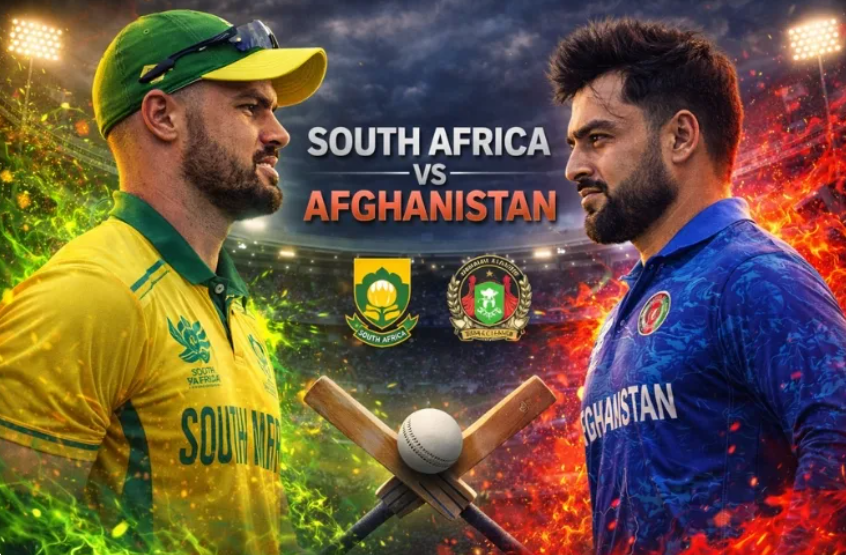
The encounters between these two international sides reflect a fascinating contrast in cricketing evolution, experience, and ambition. One team arrives with years of dominance at the highest level, built on structured systems, world class fast bowling, and consistent performances in global tournaments. The other represents rapid growth, fearless cricket, and a new wave of competitive spirit that has changed how emerging teams challenge established giants. Each meeting between them adds a new layer to their evolving story, where standings, momentum, and pride all come into play. These matches are not just about results, but about progress, learning curves, and shifting competitive balance on the world stage.
Recent Matches Table
Date
Format
Venue
Winner
Margin
First Innings
Second Innings
11 Feb 2026
T20I
Ahmedabad
South Africa
Super Over
RSA 187/6
AFG 187/10
21 Feb 2025
ODI
Karachi
South Africa
107 runs
RSA 315/6
AFG 208
22 Sep 2024
ODI
Sharjah
South Africa
7 wickets
AFG 169
RSA 170/3
20 Sep 2024
ODI
Sharjah
Afghanistan
177 runs
AFG 311/4
RSA 134
18 Sep 2024
ODI
Sharjah
Afghanistan
6 wickets
RSA 106
AFG 107/4
26 Jun 2024
T20I
Tarouba
South Africa
9 wickets
AFG 56
RSA 60/1
Team Statistics Summary Table
Team
Format
Matches
Won
Lost
Tied
No Result
South Africa
ODI
6
4
2
0
0
Afghanistan
ODI
6
2
4
0
0
South Africa
T20I
5
5
0
0
0
Afghanistan
T20I
5
0
5
0
0
South Africa
Total
11
9
2
0
0
Afghanistan
Total
11
2
9
0
0
Individual Batting Records Table
Player
Team
Matches
Innings
Runs
Highest Score
Average
Rahmanullah Gurbaz
Afghanistan
8
8
312
105
39.00
Quinton de Kock
South Africa
6
6
224
59
37.33
Azmatullah Omarzai
Afghanistan
7
7
185
86
30.83
Ryan Rickelton
South Africa
3
3
162
61
54.00
David Miller
South Africa
8
6
148
23
29.60
Ibrahim Zadran
Afghanistan
5
5
118
12
23.60
Individual Bowling Records Table
Player
Team
Matches
Overs
Wickets
Best Bowling
Economy
Rashid Khan
Afghanistan
8
62.0
15
3/28
4.45
Fazalhaq Farooqi
Afghanistan
7
48.5
12
4/35
4.82
Lungi Ngidi
South Africa
6
38.4
10
3/26
5.12
Marco Jansen
South Africa
4
24.5
8
3/16
4.20
Azmatullah Omarzai
Afghanistan
7
33.0
7
3/41
5.60
AM Ghazanfar
Afghanistan
3
26.0
6
3/24
4.15
Early Formation of Competitive Context
The beginning phase of this international contest reflects two teams entering from very different cricket ecosystems. One side arrived with long-standing global experience, structured domestic systems, and exposure to high-pressure tournaments. The other side came with rapid development, raw talent, and growing belief in competing against elite opposition. Early meetings showed a clear gap in execution, especially in handling pace, discipline in batting, and death-over control. However, even in those early stages, moments of resistance appeared through individual brilliance rather than collective dominance. These encounters slowly started shaping a competitive awareness where both sides began respecting each other’s strengths. Over time, these matches became more than results; they became benchmarks for growth, exposing weaknesses and highlighting future potential in global competitions.
Match Phase
Dominant Skill
Key Factor
Outcome Pattern
Early Stage
Fast bowling control
Experience gap
One-sided results
Middle Overs
Spin adaptation
Shot selection
Mixed performance
Death Overs
Pressure handling
Execution errors
Momentum shifts
Overall
Team balance
Consistency
Dominance vs growth
Rise of Tactical Awareness
As encounters continued, both sides began adjusting strategies to counter each other’s strengths. One team relied heavily on structured bowling rotations and disciplined batting orders, while the other focused on unpredictable spin variations and aggressive intent in shorter formats. This phase marked a shift from one-sided games to more competitive spells within matches. Field placements became more aggressive, and captains started experimenting with bowling changes earlier than usual. Batters also began showing more patience, especially against high-quality pace attacks. Even though results still leaned in favor of the more experienced side, the tactical gap started narrowing. Analysts noticed improved decision-making under pressure, especially during middle overs where matches often began to shift momentum unexpectedly.
Tactical Area
Strategy Used
Effectiveness
Match Influence
Powerplay
Aggressive field setup
High impact
Early wickets
Middle overs
Spin rotation control
Moderate impact
Stabilization
Batting plan
Risk management
Improving
Longer innings
Bowling changes
Early experimentation
Variable
Momentum shifts
First Major Competitive Breakthrough
A turning point arrived when the less experienced side delivered its most structured performance yet. Batters showed improved patience, building partnerships instead of relying on individual bursts. Bowlers executed tighter lines, forcing errors from experienced opposition players. The contest became significantly closer, with momentum swinging multiple times throughout the innings. Pressure moments defined the match, especially in the final overs where fielding intensity increased dramatically. Although the result still favored the more established team, the gap had clearly reduced. This match became a reference point for analysts, marking the first time the contest truly felt competitive rather than predictable. Fans also began recognizing the potential for future upsets, increasing global interest in upcoming encounters.
Innings Phase
Batting Approach
Bowling Response
Turning Point
Powerplay
Controlled aggression
Tight seam attack
Early wickets
Middle overs
Partnership building
Spin pressure
Stabilization
Death overs
Risk attempts
Defensive fielding
Final overs
Match result
Competitive total
Chase pressure
Narrow finish
Pressure Dynamics in High-Stakes Matches
As tournaments placed both teams in the same groups, pressure became a defining factor. Standings scenarios often meant net run rate and qualification hopes depended on their performance. One side usually entered as favorites, carrying expectations of dominance, while the other played with freedom and unpredictability. This psychological contrast created fascinating match dynamics. Experienced players often handled pressure better, especially in chasing situations, while emerging talent relied on momentum shifts to stay competitive. Small errors in fielding or running between wickets frequently decided outcomes. Over time, these pressure situations helped both teams evolve, particularly in decision-making during crunch moments of global tournaments.
Pressure Situation
Response Type
Execution Level
Match Impact
High chase target
Structured pacing
Strong
Controlled finish
Low scoring defense
Aggressive bowling
Moderate
Early breakthroughs
Knockout tension
Conservative play
High
Reduced risk
Net run rate need
Aggressive batting
Variable
Swing results
Individual Rivalries That Defined Matches
Within the broader contest, individual battles began shaping match outcomes. Fast bowlers consistently tested top-order batters with pace and bounce, often dictating early momentum. Spin duels in middle overs created tension as batters struggled to rotate strike efficiently. Captains played crucial roles, making tactical bowling changes that often shifted control within a few overs. Certain players emerged as consistent performers, repeatedly influencing results through either explosive batting or disciplined bowling spells. These personal duels became central talking points for fans and analysts, adding emotional depth to each encounter. Over time, these matchups built a narrative where individual brilliance often decided the flow of the game.
Player Role
Strength Type
Match Influence
Key Moment
Fast bowler
Pace & bounce
Early breakthroughs
Powerplay impact
Spin bowler
Variation
Middle control
Dot ball pressure
Top batter
Anchor role
Stability
Partnership building
Captain
Tactical control
Field changes
Momentum shifts
Evolution of Competitive Balance
Over successive meetings, the competitive balance gradually improved. One side maintained overall consistency due to depth and experience, while the other continued closing gaps through skill development and exposure. Batting averages improved, bowling economy rates tightened, and fielding errors reduced significantly. Matches that once ended early began stretching deeper into final overs, increasing excitement and unpredictability. This evolution demonstrated how repeated exposure to high-level competition accelerates team growth. Analysts noted that the gap in standards was no longer as wide as earlier encounters suggested, and future matches could produce more unpredictable outcomes.
Performance Area
Early Stage Level
Later Stage Level
Improvement Trend
Batting average
Low stability
Higher consistency
Significant rise
Bowling economy
Expensive spells
Controlled spells
Noticeable improvement
Fielding quality
Frequent errors
Improved accuracy
Strong progress
Match competitiveness
One-sided
Balanced contests
High growth
Impact on Global Cricket Standings
Every encounter between these two sides had implications beyond the match itself. Tournament standings, qualification scenarios, and net run rate calculations were often influenced by their results. The more experienced side typically secured stronger positions in group tables, while the emerging team used these matches as learning experiences to strengthen future campaigns. However, occasional close matches shifted momentum in standings unexpectedly, affecting other teams indirectly. These contests became important reference points for analysts tracking tournament progression. Over time, the rivalry contributed to reshaping expectations in global cricket rankings, showing that development teams could challenge established powers more effectively than before.
Standings Factor
Influence Type
Impact Level
Outcome Effect
Net run rate
High pressure
Medium
Qualification shifts
Match result
Direct impact
High
Table positioning
Bonus points
Occasional
Low
Minor changes
Group ranking
Overall effect
High
Tournament path
Future Direction of the Rivalry
Looking ahead, the contest between these two sides appears set to become more balanced and unpredictable. The emerging team continues to build confidence through exposure and experience, while the established side focuses on maintaining dominance through consistency and adaptability. Future matches are expected to feature closer finishes, stronger individual performances, and more strategic depth. As younger players gain international exposure, the gap in execution is likely to narrow further. Analysts predict that upcoming encounters could define a new phase where outcomes are no longer predictable, making the rivalry one of the most intriguing developing stories in international cricket.
Future Aspect
Expected Change
Impact Area
Prediction
Batting strength
Improved depth
Match balance
Closer games
Bowling attack
More variation
Tactical play
Higher competition
Field standards
Increased sharpness
Pressure handling
Fewer errors
Overall rivalry
Balanced contest
Global interest
Rising intensity
Conclusion
The journey of these two sides showcases how modern international cricket continues to evolve through contrast and competition. While one team maintains its reputation through consistency and depth, the other continues to close gaps with determination and improvement. Every encounter contributes to shaping future performances, influencing standings, and building confidence for upcoming challenges. What once appeared as a one-sided contest is gradually transforming into a more balanced and unpredictable rivalry. As both teams move forward, their clashes will remain important markers of growth, strategy, and competitive spirit in global cricket.