Table of Contents
The United States national cricket team and the India national cricket team represent two different stages of cricket’s international development. India have a long-established reputation as one of the strongest teams in world cricket, while the United States have made significant progress through international tournaments and the growth of cricket in North America.
The United States National Cricket Team Vs India National Cricket Team Stats offer an interesting look at this developing rivalry. Their meetings have demonstrated India’s experience in handling pressure and the USA’s ability to compete against established international opponents. The 2024 ICC Men’s T20 World Cup encounter was particularly important because the two teams met on American soil in front of a growing local cricket audience.
The rivalry is still relatively young compared with India’s contests against Australia, England, or Pakistan. However, each encounter offers useful information about batting performance, bowling discipline, team strategy, and the changing competitive landscape of international cricket.
United States vs India Head-to-Head Record
The senior men’s international rivalry between India and the United States has so far been concentrated in T20 International cricket. Neither team has an established bilateral Test or ODI history against the other.
Available head-to-head records show that India have won both of the first two recorded men’s T20Is, played in 2024 and February 2026. Some newer statistical databases report three meetings by September 2026, so the latest match register should be checked before publishing a definitive season-end total.
| Format | Matches in the established record | India wins | USA wins |
|---|---|---|---|
| Test cricket | 0 | 0 | 0 |
| ODI cricket | 0 | 0 | 0 |
| T20 Internationals | 2 | 2 | 0 |
| Total in this record | 2 | 2 | 0 |
Statistical note: This table reflects the two scorecards that can be individually identified from the available records. Some later 2026 summaries list a third T20I; verify the latest official records before treating the table as a complete current total.
India’s success in the documented encounters reflects the team’s experience in high-pressure international cricket. The United States, however, have shown that disciplined bowling and purposeful batting can make matches competitive, even against opponents with considerably more experience at the highest level.
Head-to-head statistics are most useful when read alongside match conditions and individual performances. A short rivalry may have a clear statistical leader without providing enough evidence to predict how every future match will unfold.
T20 International Stats: India vs USA
T20 International cricket is the central format of this matchup. Its fast pace gives both teams opportunities to change a game through a short batting partnership, an economical bowling spell, or an important fielding contribution.
India’s T20I approach typically combines a powerful batting lineup with specialist bowlers who can operate in the powerplay, middle overs, and death overs. The United States have developed a competitive T20 structure featuring players with experience in domestic leagues and international cricket.
| T20I head-to-head statistic | India | USA |
|---|---|---|
| Wins in the first two recorded matches | 2 | 0 |
| Losses in those matches | 0 | 2 |
| Win percentage in those matches | 100% | 0% |
| Matches played in Tests | 0 | 0 |
| Matches played in ODIs | 0 | 0 |
The figures show India’s dominance in the initial meetings, but the sample remains small. A two-match record cannot fully explain how the teams might perform across different venues, pitches, or tournament situations.
India’s batting depth can be especially important when the opposition takes early wickets. Several players in the lineup are capable of rebuilding an innings before accelerating during the final overs. Their bowling attack also offers a variety of options, allowing captains to adapt to different batting styles.
The United States can create pressure by taking wickets in the powerplay, maintaining tight fielding standards, and preventing India’s middle order from scoring freely. Their own batters need to establish partnerships and avoid losing wickets in clusters.
India vs USA T20 World Cup 2024 Match Stats
One of the most important matches in this rivalry took place on 12 June 2024 at the Nassau County International Cricket Stadium in New York during the ICC Men’s T20 World Cup.
India won the match by seven wickets after restricting the United States to 110 for eight. The American side made India work hard during the chase, particularly after dismissing Virat Kohli and Rohit Sharma early. Suryakumar Yadav and Shivam Dube then helped India recover and secure the victory.
| Match detail | Information |
|---|---|
| Date | 12 June 2024 |
| Tournament | ICC Men’s T20 World Cup |
| Venue | Nassau County International Cricket Stadium, New York |
| USA score | 110/8 in 20 overs |
| India score | 111/3 in 18.2 overs |
| Result | India won by 7 wickets |
| Player of the Match | Arshdeep Singh |
Arshdeep Singh was instrumental in India’s bowling performance. He finished with four wickets for nine runs, one of the defining individual performances of the contest. Hardik Pandya also contributed two wickets as India restricted the American batting lineup to a modest total.
For the United States, the challenge was to build a competitive score after losing early wickets. Nitish Kumar and Steven Taylor contributed during the innings, while the lower order helped the team reach 110. The total was not enormous, but the pitch made stroke-making difficult.
India’s chase began poorly, with Kohli dismissed for a golden duck and Rohit Sharma departing soon afterwards. Suryakumar Yadav’s composed half-century steadied the innings, and Dube remained unbeaten on 31 as India reached the target.
The encounter demonstrated that even a strong batting lineup can face difficulties on a challenging surface. It also showed the value of staying calm after early setbacks, an important lesson for both sides in future T20 contests.
India vs USA T20I Match in February 2026
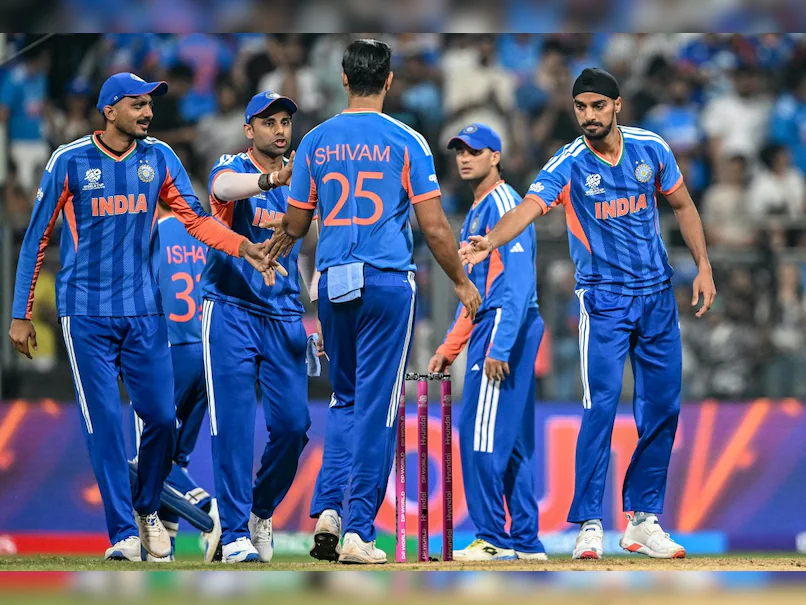
Another significant encounter took place on 7 February 2026 at Wankhede Stadium in Mumbai. India recorded a 29-run victory, extending their winning record against the United States in the documented head-to-head results.
| Match detail | Information |
|---|---|
| Date | 7 February 2026 |
| Format | T20 International |
| Venue | Wankhede Stadium, Mumbai |
| India score | 161/9 |
| USA score | 132/8 |
| Result | India won by 29 runs |
India’s total of 161 for nine provided a competitive target. The United States responded with 132 for eight but could not maintain the required scoring rate throughout the chase.
The result illustrated the importance of balancing attacking intent with wicket preservation. In T20 cricket, batters must score quickly, but losing wickets at regular intervals can prevent a team from accelerating during the final overs.
For India, defending the total required disciplined bowling and the ability to take wickets at key moments. For the United States, the match provided another opportunity to measure their progress against a leading international side.
Taken together, the 2024 and February 2026 results show that India have been successful in both a low-scoring chase and a match where they defended a higher total. These different match situations make the two encounters useful reference points when analysing the developing rivalry.
Notable Players in India vs USA Matches
Individual performances have helped define the early history of this contest. India’s experienced international players have generally entered these matches with greater exposure to major tournaments, while USA players have used the opportunity to demonstrate their development on a global stage.
| Player | Team | Notable contribution |
|---|---|---|
| Arshdeep Singh | India | Took 4 wickets for 9 runs in the 2024 T20 World Cup match |
| Suryakumar Yadav | India | Scored an unbeaten 50 in the 2024 encounter |
| Shivam Dube | India | Contributed an unbeaten 31 during the 2024 chase |
| Saurabh Netravalkar | USA | Took 2 wickets for 18 runs against India in 2024 |
| Nitish Kumar | USA | Contributed 27 runs in the 2024 match |
These performances illustrate the different ways players can influence a T20 match. Arshdeep’s bowling reduced the USA batting lineup’s scoring opportunities, while Suryakumar’s innings helped India recover after losing two important wickets early in the chase.
Netravalkar also made an impact by dismissing India’s leading batters. His performance showed that USA bowlers could challenge even highly experienced opponents when they maintained accurate lines and lengths.
Strengths of the India and USA Cricket Teams
India’s principal advantage is its depth of experience across international competitions. Its players regularly compete in high-pressure matches and have access to a well-developed domestic cricket structure. This experience can be particularly valuable when a match becomes difficult or the opposition creates unexpected pressure.
India also have several tactical options. The captain can rotate fast bowlers, introduce spin during the middle overs, and use specialist batters to accelerate the scoring rate. Such flexibility makes it easier to adjust the strategy according to pitch conditions and the opposition’s strengths.
The United States have different advantages. Their squad includes players with varied cricketing backgrounds, and experience in domestic competitions can help them adapt to the fast pace of T20 cricket. Playing on familiar North American venues can also provide useful knowledge of local conditions.
| Area of comparison | India | United States |
|---|---|---|
| International experience | Extensive | Developing |
| Batting depth | Established across formats | Improving |
| Bowling options | Broad range of specialist options | Growing variety |
| Major tournament experience | Long history | Expanding experience |
| Main opportunity | Maintain consistency and execute plans | Challenge stronger teams through discipline and teamwork |
The comparison reflects broad team characteristics rather than a permanent assessment of every squad. Player availability, injuries, selection decisions, and current form can change the balance before any individual match.
Factors That Could Decide Future Matches
Future India-USA encounters will likely depend on several important areas of performance.
Powerplay wickets: Removing India’s leading batters early can make a substantial difference. The United States will need accurate new-ball bowling and disciplined fielding to prevent India from building a strong opening partnership.
Batting partnerships: The USA must avoid losing multiple wickets in a short period. A stable partnership can help the team build a competitive total, particularly when facing India’s experienced bowling attack.
Middle-over control: Spinners and change-of-pace deliveries can restrict scoring when batters attempt to accelerate. Both sides need to find a balance between taking wickets and preventing boundaries.
Death-over execution: The final four overs frequently determine whether a T20 innings finishes with a competitive score. Accurate yorkers, slower balls, smart running, and effective boundary hitting can all change the outcome.
Pressure management: India’s international experience gives the team an advantage in many high-pressure situations. However, the USA can remain competitive by following a clear plan and making good decisions when momentum changes.
As the United States gain more experience in major international competitions, future encounters may provide a clearer picture of how closely the teams compare across different conditions.
Frequently Asked Questions
1. How many times have India and the United States played against each other?
The established men’s T20I record identifies two matches between India and the United States, played in June 2024 and February 2026. India won both encounters. There is no established senior men’s Test or ODI head-to-head record between the teams.
2. Who has won more matches between India and the USA?
India have won both of the documented encounters, giving them a 100% winning record in those two matches. The United States are still seeking their first victory against India in the senior men’s international fixture.
3. What happened in the India vs USA T20 World Cup 2024 match?
India defeated the United States by seven wickets on 12 June 2024 in New York. The USA scored 110 for eight, and India reached 111 for three in 18.2 overs. Arshdeep Singh took four wickets for nine runs, while Suryakumar Yadav scored an unbeaten half-century.
4. What was the result of the India vs USA match in February 2026?
India defeated the United States by 29 runs at Wankhede Stadium in Mumbai on 7 February 2026. India scored 161 for nine, and the USA finished on 132 for eight.
5. Why are India vs USA cricket statistics important?
These statistics help fans understand the early history of the rivalry, compare team performances, and follow the development of American cricket. They also provide context for evaluating individual players, match results, and the competitive gap between the teams.
Conclusion
The United States National Cricket Team Vs India National Cricket Team Stats reveal a developing international rivalry in which India have established an early advantage. The two documented T20I encounters produced different challenges: India chased a low total in New York in 2024 and defended a higher score in Mumbai in February 2026.
Arshdeep Singh’s bowling and Suryakumar Yadav’s batting were defining contributions in the first match, while the 2026 result demonstrated India’s ability to defend a competitive total. The United States, meanwhile, have shown that disciplined bowling and determined batting can create pressure against a leading cricket nation.
The rivalry remains limited in comparison with established international contests, but it offers an interesting perspective on cricket’s growth in the United States. Future meetings will provide more data for comparing batting records, bowling performances, and team results. For the most accurate statistical analysis, readers should use the latest official scorecards alongside historical head-to-head figures.