Table of Contents
Test cricket has traditionally been a demanding part of this rivalry because both teams have produced generations of skilled fast bowlers and technically accomplished batters. According to the available head to head record through December 2025, New Zealand have won 11 of the 16 Tests played between the teams since 2006, while West Indies have won three and two matches have ended in draws.
New Zealand have often been particularly effective at home, where seam-friendly pitches can help their fast bowlers generate movement. West Indies have also produced important victories, especially when their batters have built long partnerships and their bowlers have maintained pressure over extended periods.
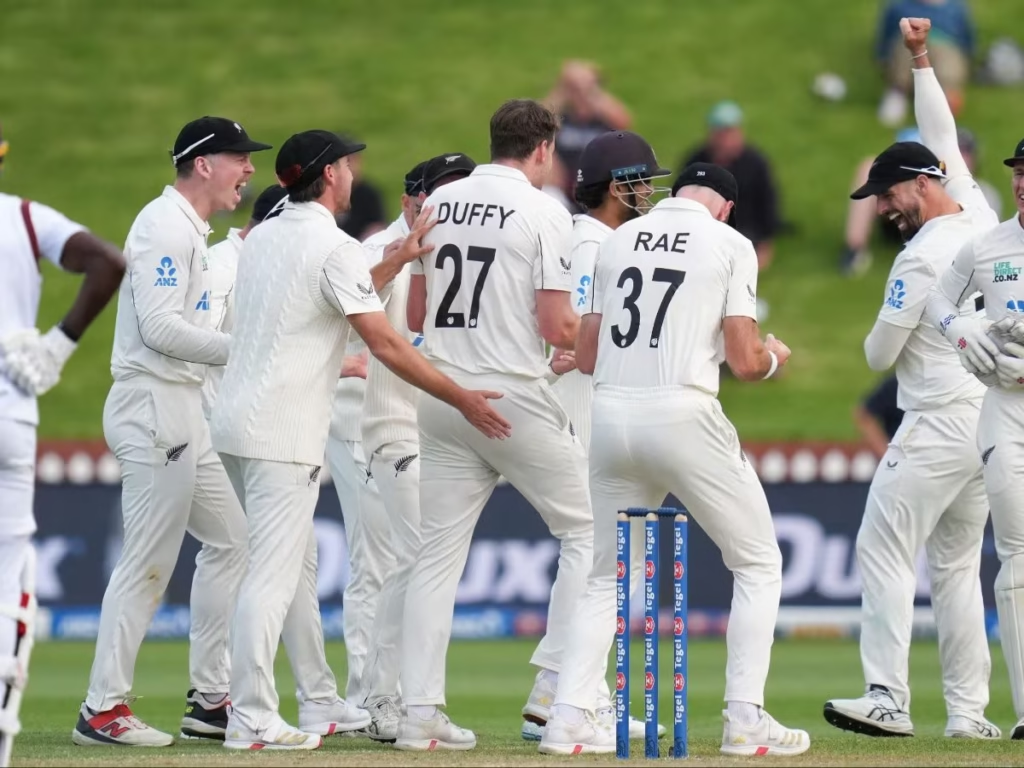
The 2025 Test series in New Zealand demonstrated the challenge facing the West Indies. The opening Test in Christchurch ended in a draw, but New Zealand won the second Test in Wellington by nine wickets and the third Test at Mount Maunganui by 323 runs. The series highlighted New Zealand’s ability to recover from difficult situations and dominate through both batting and bowling.
West Indies Vs New Zealand ODI Head To Head Record
One Day International cricket has produced a long and competitive history between West Indies and New Zealand. The teams first met in the 1975 Cricket World Cup, when West Indies defeated New Zealand in the second semifinal by five wickets. Since then, their rivalry has included bilateral series, World Cup encounters and several high scoring matches.
The historical ODI record through July 2026 includes 76 matches. New Zealand have won 36, West Indies have won 33, and seven matches have ended without a result. This makes ODI cricket the closest of the three formats in terms of overall wins.
| ODI Statistic | Record |
|---|---|
| Matches played | 76 |
| West Indies wins | 33 |
| New Zealand wins | 36 |
| No results | 7 |
New Zealand have generally performed well against West Indies through disciplined bowling and reliable batting partnerships. However, West Indies have remained dangerous because their batters can change the momentum of a match in a short period.
The teams’ recent ODI encounters in July 2026 produced particularly competitive cricket. West Indies won the first match by seven wickets after chasing 268, while New Zealand won the next two matches by five wickets and six wickets respectively. West Indies then won the fifth match by two wickets, demonstrating how closely contested the series had become.
West Indies Vs New Zealand T20 International Stats
T20 International cricket brings a different dimension to this rivalry. The format rewards aggressive batting, flexible bowling strategies and the ability to perform under pressure during short periods of play.
The teams have played 25 men’s T20 Internationals according to the available historical records. New Zealand have generally held the advantage, although West Indies have recorded important victories and have the kind of explosive batting lineup capable of changing any contest. Published statistical databases differ slightly in how they classify certain tied matches and results, so exact win totals should be checked against the specific record source being used.
West Indies have traditionally relied on power hitters who can score boundaries against both pace and spin. Their approach often involves attacking during the powerplay and accelerating further in the final overs.
New Zealand tend to combine aggressive batting with calculated partnerships. Their batters frequently look for scoring opportunities while avoiding unnecessary risks, and their bowlers use variations to control the scoring rate.
The November 2025 T20I series in New Zealand demonstrated the hosts’ strength in this format. New Zealand won the series 3 to 1, with the fourth match abandoned without a result. The fifth match ended with New Zealand winning by eight wickets after chasing 141.
Highest Team Scores And Memorable Matches
High scoring matches have been a feature of West Indies and New Zealand ODI cricket. Both sides possess batters capable of taking advantage of favorable pitches and smaller boundaries.
West Indies have historically been associated with aggressive stroke play, while New Zealand have combined attacking batting with strong running between the wickets. When these approaches come together, matches can feature substantial totals and rapid changes in momentum.
The 2025 ODI series in New Zealand included several competitive results. New Zealand won the opening match by seven runs after posting 269 for seven, while West Indies scored 262 for six. The second match was also closely fought, with New Zealand reaching 248 for five to chase a revised target of 248 in a rain affected contest.
In July 2026, the teams again produced close ODI matches. West Indies successfully chased 268 in the first game, while New Zealand responded with victories in the next two matches. The final game of the series went to West Indies by two wickets.
These results demonstrate that neither side can rely entirely on its historical advantage. Pitch conditions, batting partnerships, bowling execution and fielding quality all play important roles in determining the winner.
Leading Batters In The Rivalry
Both teams have produced outstanding batters across different generations. West Indies have traditionally been known for powerful stroke makers, while New Zealand have developed players capable of combining aggressive scoring with technical consistency.
For West Indies, Chris Gayle remains one of the most recognizable names in limited overs cricket. His ability to hit boundaries against fast bowlers and spinners made him a dangerous opponent in ODI and T20 matches.
Brian Lara also holds an important place in West Indies cricket history because of his exceptional batting ability. Although Test cricket was his strongest format, his performances helped establish the team’s reputation for producing technically gifted batters.
In the modern era, Shai Hope has become an important ODI batter for West Indies. His ability to construct an innings and accelerate later can be particularly valuable against New Zealand’s disciplined bowling attack. Nicholas Pooran and other aggressive middle order batters can also influence the outcome of limited overs matches.
New Zealand have relied on players such as Kane Williamson, Ross Taylor, Martin Guptill and Devon Conway. Williamson is known for his composure and technical skill, while Guptill’s aggressive opening batting made him a dangerous limited overs player. Conway has provided further strength through his ability to score consistently across formats.
The performances of these players illustrate the contrasting batting styles that make the rivalry interesting. West Indies often look to maximize power hitting, while New Zealand frequently combine controlled accumulation with targeted aggression.
Bowling Performances And Key Match Winners
Bowling has been central to the history of West Indies versus New Zealand cricket. Both teams have produced fast bowlers capable of troubling batters with pace, swing and bounce.
West Indies have a rich fast bowling tradition that includes legendary players such as Curtly Ambrose, Courtney Walsh and Malcolm Marshall. Their aggressive bowling helped establish the team as a dominant force during earlier periods of international cricket.
Modern West Indies bowlers continue to play an important role in limited overs cricket. The team’s success often depends on taking early wickets and preventing opposing batters from building large partnerships.
New Zealand have also developed a strong pace bowling tradition. Richard Hadlee was one of the country’s most influential historical players, while more recent generations have included Tim Southee, Trent Boult and Matt Henry.
New Zealand’s bowling strategy often focuses on accuracy, movement and the ability to create pressure through consecutive dot balls. These qualities can be particularly effective against aggressive West Indies batters, who sometimes attempt high risk shots to increase the scoring rate.
In Test cricket, disciplined bowling and sustained pressure become even more important. The team’s ability to maintain consistent lines and lengths over long spells often determines whether a match ends in a draw or a decisive victory.
Key Differences Between The Three Formats
The head to head record varies depending on the format, which makes this rivalry especially interesting for cricket fans.
In Test cricket, New Zealand have held the advantage in the modern record. Their ability to exploit home conditions and build strong first innings totals has helped them win important matches. West Indies, however, have recorded victories throughout the longer history of the rivalry.
ODI cricket has been more closely contested. The historical record through July 2026 shows New Zealand with 36 wins and West Indies with 33, excluding matches without a result. This narrow difference reflects the competitiveness of their one day encounters.
T20 cricket places greater emphasis on explosive batting, quick decision making and effective death bowling. New Zealand’s recent series victories have highlighted their ability to execute plans consistently, but West Indies remain capable of producing powerful performances.
These format differences show why a team’s historical record cannot fully predict the outcome of an individual match. A side that struggles in Test cricket may still be highly competitive in T20 cricket because the shorter format places different demands on players.
What The Head To Head Statistics Reveal
The overall statistics indicate that New Zealand have generally been the more successful team in this matchup, especially in Test cricket and several recent limited overs series. Nevertheless, West Indies have remained competitive in ODIs, where the historical win totals are relatively close.
The 2025 and 2026 ODI matches are particularly useful examples. Both teams secured victories during closely contested series, and several games were decided by relatively narrow margins. These performances suggest that the rivalry remains competitive despite New Zealand’s overall advantage.
For West Indies, greater consistency with the bat and better control during the middle overs could help them improve their record. For New Zealand, maintaining disciplined bowling and building partnerships will remain important strengths.
The future of this rivalry will depend on how both teams adapt to changing conditions, develop younger players and manage the pressure of international tournaments.
FAQs
1. How many matches have West Indies and New Zealand played in international cricket?
The teams have played international cricket across Test matches, ODIs and T20 Internationals. The exact combined total depends on the date of the record and the format classifications used. Their ODI history alone includes 76 matches through July 2026.
2. Which team has won more ODI matches between West Indies and New Zealand?
New Zealand have won more ODI matches in the historical record through July 2026. They have recorded 36 victories, compared with 33 for West Indies, while seven matches ended without a result.
3. Who won the first ODI between West Indies and New Zealand?
West Indies won their first ODI meeting against New Zealand during the 1975 Cricket World Cup. They defeated New Zealand by five wickets in the second semifinal.
4. Which team has the stronger Test record between West Indies and New Zealand?
New Zealand have the stronger modern Test record. In the 16 matches recorded since March 2006, New Zealand have won 11, West Indies have won three and two matches have ended in draws.
5. Who won the recent West Indies versus New Zealand ODI series in July 2026?
The five match ODI series featured three victories for New Zealand and two for West Indies. New Zealand won the series overall, although West Indies won the final match by two wickets.
Conclusion
The West Indies Cricket Team Vs New Zealand National Cricket Team Stats reveal a long international rivalry shaped by contrasting playing styles, outstanding individual performances and competitive matches across all three formats. New Zealand have held the stronger historical position in Test cricket and have also maintained an advantage in ODIs and T20 Internationals. However, West Indies have repeatedly shown their ability to challenge New Zealand, particularly through aggressive batting and effective fast bowling. The closely contested ODI matches in 2025 and 2026 demonstrate that this rivalry continues to produce unpredictable results. As both teams develop new talent and compete in future international series, their head to head statistics will continue to evolve, creating further opportunities for memorable performances and exciting cricket.