Table of Contents
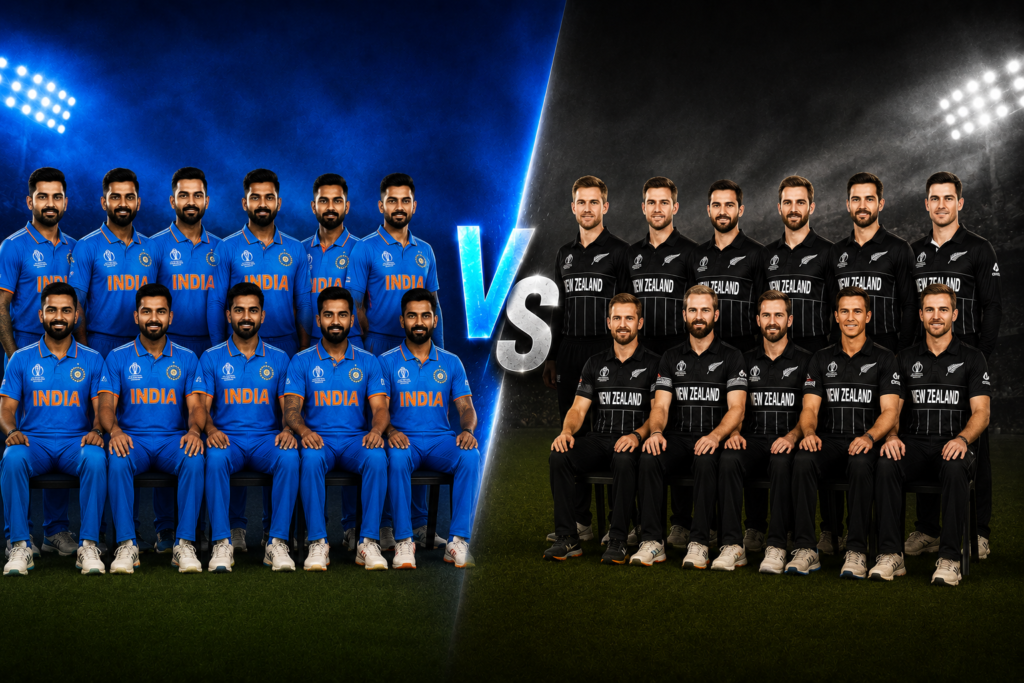
The India National Cricket Team Vs New Zealand National Cricket Team Timeline is not defined by hostility or controversy. Instead, it is a story of resilience, tactical battles, dramatic ICC encounters, and mutual respect stretching across nearly a century. From New Zealand’s first-ever Test tour to India in the 1950s to unforgettable World Cup clashes and World Test Championship drama, this rivalry has consistently produced moments that shaped cricket history.
Unlike some cricket rivalries built on aggression, India and New Zealand have forged a competitive relationship where adaptability, discipline, and cricketing intelligence have often determined the winner. Understanding this timeline offers insight into how two cricketing cultures evolved and influenced the modern game.
The Beginning of the Rivalry: New Zealand’s Early Tours and India’s Growing Identity
The roots of this rivalry date back to the post-war era when international cricket was still expanding beyond England and Australia. New Zealand toured India in 1955–56, marking the first Test series between the two nations.
At that time, India was still establishing itself as a competitive Test side, while New Zealand was searching for consistency on the international stage. The series became significant because it introduced a contest between two nations that would later become regular competitors across formats.
Early India-New Zealand Test Milestones
| Year | Event | Significance |
| 1955–56 | First Test series | Beginning of bilateral rivalry |
| 1956 | India won series 2–0 | India’s growing strength at home |
| 1968 | New Zealand won series | First overseas Test series win for NZ |
The 1968 series in New Zealand remains particularly important. It delivered New Zealand’s first-ever Test series victory against India and represented a major breakthrough for Kiwi cricket on the world stage.
This period laid the foundation for a rivalry built less on dominance and more on adaptation to contrasting conditions.
How Conditions Shaped the Rivalry Across Decades
One reason the India National Cricket Team Vs New Zealand National Cricket Team Timeline remains fascinating is the stark difference in playing environments.
Home Conditions Comparison
| Factor | India | New Zealand |
| Pitch Type | Spin-friendly | Seam-friendly |
| Average Bounce | Low to moderate | High and consistent |
| Weather Impact | Heat and dry conditions | Cool and windy |
| Primary Bowling Strength | Spin | Swing and seam |
These contrasting conditions often meant that visiting teams faced steep learning curves.
India’s legendary spinners frequently dominated on turning tracks, while New Zealand’s pace attacks exploited movement in green conditions.
As a result, home advantage became one of the defining themes of the rivalry for several decades.
The 1970s and 1980s: Competitive but Understated Battles
While India and Pakistan or Australia and England often grabbed headlines, India and New Zealand quietly produced highly competitive cricket during the 1970s and 1980s.
Players such as Sunil Gavaskar and Richard Hadlee became central figures.
Key Players of the Era
| India | New Zealand |
| Sunil Gavaskar | Richard Hadlee |
| Kapil Dev | Martin Crowe |
| Dilip Vengsarkar | Jeremy Coney |
| Ravi Shastri | John Wright |
Richard Hadlee’s influence cannot be overstated. His ability to exploit New Zealand conditions frequently troubled Indian batting lineups.
Meanwhile, India’s batting depth often helped neutralize New Zealand’s strengths at home.
Although these contests lacked the commercial spotlight of larger rivalries, they helped establish mutual respect between two highly disciplined cricketing cultures.
The Rise of ODI Cricket and New Zealand’s Tactical Innovation
The introduction of One-Day Internationals transformed international cricket, and New Zealand adapted quickly.
During the 1990s, New Zealand became known for innovation and tactical flexibility. India, meanwhile, developed a powerful batting tradition led by emerging stars.
ODI Head-to-Head Trends in the 1990s
| Aspect | India | New Zealand |
| Batting Firepower | Stronger | Moderate |
| Bowling Discipline | Improving | Strong |
| Fielding Standards | Average | Excellent |
| Tactical Innovation | Developing | Advanced |
The emergence of players such as Sachin Tendulkar and Stephen Fleming elevated the rivalry.
New Zealand frequently punched above its weight through strategy, while India relied increasingly on batting brilliance.
This contrast became one of the rivalry’s defining characteristics.
World Cup Encounters That Changed the Narrative
No discussion of the India National Cricket Team Vs New Zealand National Cricket Team Timeline is complete without examining ICC tournaments.
For many years, New Zealand held a psychological advantage over India in World Cups.
Major ICC Tournament Meetings
| Tournament | Winner |
| 1975 World Cup | New Zealand |
| 1987 World Cup | New Zealand |
| 1992 World Cup | New Zealand |
| 1999 World Cup | New Zealand |
| 2003 World Cup | New Zealand |
| 2019 World Cup Semi-final | New Zealand |
| 2023 World Cup Semi-final | India |
The 2019 Cricket World Cup semi-final remains among the most memorable matches in modern cricket.
New Zealand’s disciplined bowling attack dismantled India’s star-studded batting lineup, creating one of the biggest upsets in tournament history.
The result reinforced New Zealand’s reputation as a team capable of outperforming expectations on the biggest stage.
The Dhoni, Kohli, and Williamson Era: A Modern Rivalry Emerges
The rivalry gained new relevance during the 2010s.
India became a cricketing superpower with immense depth across formats. New Zealand evolved into one of the most consistent teams in international cricket.
Captains Who Defined the Modern Era
| India | New Zealand |
| MS Dhoni | Brendon McCullum |
| Virat Kohli | Kane Williamson |
| Rohit Sharma | Tim Southee |
The rivalry became increasingly balanced.
India often dominated bilateral cricket, especially at home.
New Zealand, however, repeatedly delivered strong performances in major ICC tournaments.
This contrast created a fascinating dynamic where rankings often favored India while knockout matches frequently favored New Zealand.
The World Test Championship Final: New Zealand’s Greatest Triumph
The inaugural World Test Championship final in 2021 added a historic chapter to the timeline.
Held in England, the match brought together the world’s two leading Test sides.
WTC Final 2021 Snapshot
| Detail | Information |
| Venue | Southampton |
| Winner | New Zealand |
| Margin | 8 wickets |
| Player of Match | Kyle Jamieson |
New Zealand’s victory represented far more than a single match win.
It validated years of disciplined planning, excellent leadership, and investment in red-ball cricket.
For India, the defeat was disappointing because the team entered the contest as favorites.
For New Zealand, it became arguably the greatest achievement in the nation’s cricket history.
India’s Response and the Shift in Momentum
Following the WTC final defeat, India began addressing weaknesses exposed by New Zealand.
Greater emphasis was placed on seam-bowling depth, adaptability overseas, and tactical flexibility.
The result became visible during subsequent bilateral contests and ICC events.
Recent Momentum Shift
| Period | Dominant Team |
| 2000–2010 | Balanced |
| 2011–2019 | New Zealand in ICC events |
| 2020–2022 | New Zealand edge |
| 2023 onwards | India stronger overall |
The 2023 World Cup semi-final was especially significant.
India finally defeated New Zealand in a World Cup knockout encounter, ending years of frustration.
The victory symbolized a changing competitive balance and showcased India’s ability to overcome psychological barriers.
Records and Statistics That Define the Rivalry
Statistics tell only part of the story, but certain numbers reveal how closely matched these teams have been.
Key Rivalry Records
| Category | Record Holder |
| Most Runs in Tests | Sachin Tendulkar |
| Most ODI Runs | Sachin Tendulkar |
| Most Test Wickets | Richard Hadlee |
| Most ODI Wickets | Daniel Vettori |
| Highest Individual Test Score | Brendon McCullum |
| Best Bowling Figures | Richard Hadlee |
These records reflect different eras.
India’s batting icons dominate run-scoring lists, while New Zealand’s legendary bowlers often feature prominently among wicket-takers.
That balance highlights the contrasting strengths that have shaped the rivalry.
Why This Rivalry Matters More Than Numbers
Some rivalries are measured by intensity.
Others are measured by influence.
The India-New Zealand rivalry belongs to the second category.
New Zealand consistently demonstrated how strategic thinking and team culture can compete against larger cricketing powers.
India, meanwhile, showed how sustained investment in talent development can create depth across generations.
The rivalry also produced some of cricket’s most respected ambassadors, including Kane Williamson, Rahul Dravid, Stephen Fleming, Anil Kumble, Brendon McCullum, and Virat Kohli.
For young cricketers, these contests often serve as masterclasses in discipline, adaptability, and sportsmanship.
The Future of India vs New Zealand Cricket
Looking ahead, the rivalry appears stronger than ever.
India possesses perhaps the deepest talent pool in world cricket.
New Zealand continues to maximize resources through exceptional planning and player development.
Emerging players on both sides suggest the next decade could deliver another golden period of competition.
Test cricket remains particularly intriguing because the contrasting conditions in India and New Zealand continue to challenge visiting teams.
Meanwhile, ICC tournaments ensure that every meeting carries significant global attention.
The rivalry may never be cricket’s loudest, but it remains one of the game’s most compelling.
Conclusion
The India National Cricket Team Vs New Zealand National Cricket Team Timeline tells the story of two nations that built a rivalry through excellence rather than hostility. From the first Test encounters in the 1950s to dramatic World Cup battles and the World Test Championship final, every era has added a meaningful chapter.
What makes this rivalry unique is its balance of respect, tactical sophistication, and historical significance. Whether through Richard Hadlee’s brilliance, Sachin Tendulkar’s mastery, Kane Williamson’s leadership, or India’s modern resurgence, the India National Cricket Team Vs New Zealand National Cricket Team Timeline continues to evolve and remains one of cricket’s most fascinating journeys.
Frequently Asked Questions
When did India and New Zealand first play a Test series?
India and New Zealand first met in a Test series during New Zealand’s tour of India in 1955–56. The series marked the beginning of an international rivalry that has since spanned all major formats of the game. India won that inaugural series, but the significance extended beyond the result. It helped establish regular cricketing ties between two nations that were still developing their identities within international cricket. The series remains an important historical milestone in cricket history.
What is the most important match in the India-New Zealand rivalry?
Many cricket historians consider the 2021 World Test Championship Final the most significant match between the two teams. The match crowned the first official World Test Champion and represented a major achievement for New Zealand cricket. India’s strong Test record made the contest highly anticipated. New Zealand’s victory elevated the importance of the rivalry and provided one of the defining moments in modern Test cricket.
Why has New Zealand often performed well against India in ICC tournaments?
New Zealand’s success against India in ICC events has often come from tactical discipline and adaptability. Unlike bilateral series, knockout matches place enormous pressure on decision-making. New Zealand traditionally excels in these situations through consistent bowling, outstanding fielding, and calm leadership. The team has frequently neutralized India’s batting strengths by executing clear plans and maintaining composure during critical moments.
Who has scored the most runs in India vs New Zealand matches?
Sachin Tendulkar remains one of the leading run-scorers in the rivalry across formats. His longevity allowed him to face multiple generations of New Zealand cricketers while consistently producing runs. Tendulkar’s performances helped shape many important chapters of the rivalry and reinforced his reputation as one of cricket’s greatest batters.
What was New Zealand’s biggest achievement against India?
The World Test Championship Final victory in 2021 is widely regarded as New Zealand’s greatest achievement against India. Winning an ICC global Test title against one of the strongest teams in the world represented the culmination of years of planning and development. The triumph remains one of the proudest moments in New Zealand cricket history.
How did India change the rivalry after 2021?
Following the WTC final defeat, India focused on improving adaptability in varying conditions and strengthening its pace-bowling resources. The team’s response became evident in later tournaments, including the 2023 Cricket World Cup, where India defeated New Zealand in a high-profile semi-final. That victory signaled a shift in momentum and demonstrated India’s ability to overcome previous tournament disappointments.
Why is this rivalry respected throughout the cricket world?
The rivalry is admired because it consistently showcases sportsmanship, tactical intelligence, and high-quality cricket. Unlike rivalries driven by controversy, India and New Zealand have built their contests on mutual respect. Matches often feature strategic battles between world-class players, making them enjoyable for purists and casual fans alike.