Table of Contents
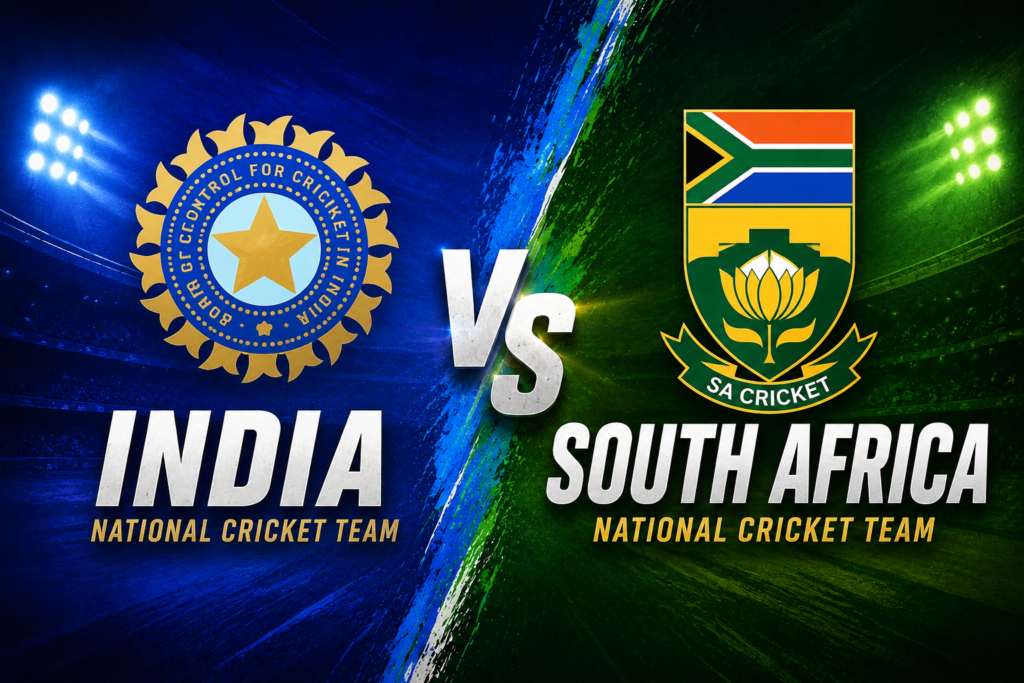
The India National Cricket Team Vs South Africa National Cricket Team Timeline represents one of the most fascinating rivalries in modern cricket. Unlike century-old contests such as England versus Australia, this rivalry was born in the early 1990s following South Africa’s return to international cricket and has evolved into a battle defined by elite fast bowling, world-class batting, dramatic ICC tournament clashes, and unforgettable performances.
Over more than three decades, India and South Africa have produced matches that shaped careers, influenced cricketing strategies, and delivered some of the sport’s most memorable moments. From South Africa’s first tour of India in 1991-92 to high-pressure World Cup encounters and thrilling bilateral series, the timeline of this rivalry reflects the growth of two cricketing powerhouses that have consistently challenged each other across all formats.
The Beginning of a New Era: South Africa’s Return and the First India Encounter
The rivalry officially began during a transformative period in world cricket. South Africa returned to international competition in 1991 after years of isolation. India became one of the first major cricketing nations to host the Proteas, creating a historic chapter in cricket history.
Early India vs South Africa Timeline
| Year | Event | Significance |
|---|---|---|
| 1991 | India tour of South Africa | First official bilateral series |
| 1992 | South Africa tour of India | First Proteas tour of India |
| 1992 | Cricket World Cup meeting | First World Cup clash |
| 1993 | Regular bilateral contests begin | Rivalry starts taking shape |
These early encounters were important because both teams were defining their identities. South Africa brought athletic fielding and quality pace bowling, while India relied on spin-friendly conditions and technically gifted batters.
The contrast in styles immediately made the rivalry intriguing. South Africa excelled on fast surfaces, whereas India remained dominant on turning tracks. This dynamic would continue to shape contests for decades.
India National Cricket Team Vs South Africa National Cricket Team Timeline in Test Cricket
Test cricket has provided the most authentic measure of the rivalry. South Africa traditionally dominated at home due to pace-friendly conditions, while India often controlled matches on subcontinental pitches.
Overall Test Rivalry Snapshot
| Category | India | South Africa |
| Test Matches Played | Multiple Series Since 1992 | Multiple Series Since 1992 |
| Home Strength | Exceptional Spin Conditions | Pace and Bounce Advantage |
| Historic Achievement | First Test Series Win in SA (2021-22 nearly achieved but lost series) | Consistent Home Dominance |
One of the defining features of this rivalry has been adaptability. Indian teams struggled in South Africa throughout the 1990s and early 2000s. Legends such as Sachin Tendulkar, Rahul Dravid, and Sourav Ganguly produced remarkable innings, yet series victories remained elusive.
South Africa’s bowling attacks featuring Allan Donald, Shaun Pollock, Dale Steyn, Morne Morkel, and Kagiso Rabada consistently tested India’s batting lineup.
However, the balance gradually shifted. India’s pace resources improved significantly, allowing them to compete more effectively in South African conditions than any previous generation.
The Golden Age Battles: 2006–2015
Many cricket historians consider the period between 2006 and 2015 the most competitive phase of the rivalry.
Several reasons contributed to this:
- India became a stronger overseas side.
- South Africa reached the peak of its Test dominance.
- Both teams possessed world-class batting lineups.
- Fast bowlers regularly influenced results.
Key Players During the Golden Era
| India | South Africa |
| Sachin Tendulkar | Jacques Kallis |
| Rahul Dravid | Graeme Smith |
| Virender Sehwag | AB de Villiers |
| MS Dhoni | Dale Steyn |
| Zaheer Khan | Hashim Amla |
The famous 2010-11 Test series in South Africa showcased the quality of both teams. Tendulkar scored a magnificent century in Cape Town while Steyn delivered some of the finest fast bowling performances of the era.
These contests elevated the rivalry beyond bilateral cricket and turned it into a battle between two of the strongest teams in the ICC rankings.
ODI Rivalry: From Bilateral Battles to World Cup Drama
While Test cricket established respect between the teams, One-Day Internationals brought broader global attention.
India vs South Africa ODI Milestones
| Year | Milestone |
| 1992 | First World Cup meeting |
| 2000 | High-profile ODI contests increase |
| 2011 | World Cup thriller in Nagpur |
| 2015 | India defeats South Africa in World Cup |
| 2023 | India dominates league-stage World Cup clash |
The 2011 Cricket World Cup match in Nagpur remains particularly memorable. Despite Sachin Tendulkar’s century, South Africa chased successfully thanks to disciplined batting and tactical execution.
In contrast, the 2015 World Cup encounter highlighted India’s evolution as a tournament team. A commanding victory established momentum that carried India deep into the competition.
ODI contests between the two nations frequently feature narrow margins because both teams traditionally field balanced lineups with strong batting depth and versatile bowling attacks.
ICC Tournament Encounters That Defined the Rivalry
Some rivalries are remembered for bilateral series. India versus South Africa is remembered equally for ICC tournaments.
Major ICC Tournament Meetings
| Tournament | Result |
| 1992 World Cup | South Africa Win |
| 1999 World Cup | South Africa Win |
| 2011 World Cup | South Africa Win |
| 2015 World Cup | India Win |
| 2023 World Cup | India Win |
| 2024 T20 World Cup Final | India Win |
The 2024 T20 World Cup Final deserves special attention.
India and South Africa entered the final undefeated, making it one of the most anticipated championship matches in recent memory. South Africa appeared poised to secure their first major ICC trophy before India’s bowlers produced a dramatic comeback in the closing overs.
The match instantly became one of the greatest T20 finals ever played and added a new chapter to the rivalry’s history.
More importantly, it transformed the narrative around both teams. India ended a long ICC trophy drought, while South Africa once again experienced heartbreak in a knockout match.
Legendary Individual Performances Across the Timeline
Great rivalries are built on great performances.
Memorable Individual Achievements
| Player | Achievement |
| Sachin Tendulkar | Multiple centuries across formats |
| Jacques Kallis | Match-winning all-round displays |
| AB de Villiers | Innovative batting brilliance |
| Virat Kohli | Consistent dominance in ODIs |
| Dale Steyn | Elite fast bowling spells |
| Rohit Sharma | Major World Cup performances |
| Kagiso Rabada | Modern pace spearhead |
Tendulkar’s centuries in South African conditions demonstrated technical excellence against world-class pace attacks.
AB de Villiers often altered matches through his versatility. Few players adapted as successfully to Indian spin conditions while remaining dominant at home.
Virat Kohli’s record against South Africa further elevated the rivalry. His ability to score across formats made him one of the defining figures in India-South Africa contests.
How Playing Conditions Shaped the Rivalry
One of the most fascinating aspects of the India-South Africa rivalry is how geography influences outcomes.
Conditions Comparison
| Factor | India | South Africa |
| Pitch Nature | Spin Friendly | Pace Friendly |
| Bounce | Moderate | High |
| Reverse Swing | Common | Less Frequent |
| Turn | Significant | Limited |
| Pace Assistance | Variable | Consistent |
These differences have created unique challenges.
Indian batters traditionally needed to improve their technique against bounce and movement when touring South Africa. Conversely, South African players had to develop methods for handling prolonged spin bowling in India.
The team that adapted best usually won key series.
This strategic dimension separates the rivalry from many others in world cricket.
The Rise of New Generations and the Changing Balance of Power
The rivalry has continuously reinvented itself.
The generation of Tendulkar, Kallis, Dravid, and Pollock eventually gave way to Kohli, Rabada, Rohit Sharma, Quinton de Kock, Jasprit Bumrah, and Temba Bavuma.
Evolution of the Rivalry
| Era | Defining Feature |
| 1990s | South Africa’s return |
| 2000s | Fast bowling dominance |
| 2010s | Balanced competition |
| 2020s | Multi-format intensity |
| Present Day | Strong depth on both sides |
Modern contests are more balanced than ever before.
India’s improved fast-bowling resources have reduced South Africa’s traditional home advantage. At the same time, South Africa has developed players who perform better in Asian conditions than previous generations.
This evolution ensures the rivalry remains relevant in every format.
Records and Statistics That Matter Most
Statistics alone do not define a rivalry, but they reveal important trends.
Key Rivalry Facts
| Category | Notable Trend |
| Tests | Strong home dominance historically |
| ODIs | Closely contested rivalry |
| T20Is | Increasingly competitive |
| World Cups | Several iconic matches |
| ICC Knockouts | High-pressure encounters |
Perhaps the most significant trend is the narrowing gap between home and away performances.
During the early years, visiting teams often struggled. Modern squads, supported by advanced analytics, specialized coaching, and extensive international experience, have become far more adaptable.
That shift has improved the quality of contests and increased unpredictability.
Why India vs South Africa Remains One of Cricket’s Most Respected Rivalries
Unlike rivalries fueled by political tension or historical animosity, India and South Africa share a relationship built largely on mutual respect.
Players from both nations frequently praise each other’s professionalism and competitiveness.
The rivalry is respected because:
- It consistently produces high-quality cricket.
- Both teams have generated legendary players.
- Home and away challenges test every skill.
- ICC tournament clashes carry enormous significance.
- The standard of competition remains exceptionally high.
Few cricketing contests combine technical excellence, strategic depth, and sporting respect as effectively as India versus South Africa.
Conclusion
The India National Cricket Team Vs South Africa National Cricket Team Timeline is far more than a list of matches and results. It is a story of cricket’s evolution over the past three decades. From South Africa’s international return in 1991 to unforgettable World Cup encounters and dramatic ICC finals, the rivalry has continually delivered moments that define generations.
What makes the India National Cricket Team Vs South Africa National Cricket Team Timeline truly special is its balance of skill, adaptability, and mutual respect. As new stars emerge and formats continue to evolve, this rivalry remains one of international cricket’s most compelling contests and is certain to produce many more historic chapters in the years ahead.
Frequently Asked Questions
What was the first official match in the India National Cricket Team Vs South Africa National Cricket Team Timeline?
The rivalry began after South Africa returned to international cricket in 1991. India toured South Africa shortly after the Proteas were readmitted to global cricket. The series carried immense historical significance because it marked South Africa’s reintegration into international competition. Those matches established the foundation for a rivalry that would grow dramatically over the next three decades across Tests, ODIs, and T20 Internationals.
Which ICC tournament match is considered the most important between India and South Africa?
Several matches qualify, but the 2024 T20 World Cup Final stands out because it involved a world championship and featured dramatic momentum swings. South Africa appeared close to winning their first ICC trophy before India produced a remarkable comeback. The stakes, quality of cricket, and emotional significance elevated the match into one of the defining moments of the rivalry.
Why has South Africa traditionally been difficult for India in Test cricket?
South African pitches offer pace, bounce, and seam movement that differ significantly from conditions in India. Historically, Indian batting lineups found it challenging to adapt to these surfaces. Additionally, South Africa consistently produced elite fast bowlers such as Allan Donald, Shaun Pollock, Dale Steyn, and Kagiso Rabada. Over time, India improved by developing stronger pace attacks and better preparation methods for overseas tours.
Who are the most influential players in the rivalry’s history?
Sachin Tendulkar, Jacques Kallis, AB de Villiers, Virat Kohli, Dale Steyn, Rahul Dravid, Graeme Smith, and Kagiso Rabada are among the most influential figures. Each player left a lasting impact through match-winning performances, consistency, and memorable moments. Their contributions elevated the rivalry from a bilateral contest into one of the premier matchups in world cricket.
How has the rivalry changed in the T20 era?
The T20 era introduced greater unpredictability and increased frequency of encounters. Power-hitting, specialized bowling roles, and franchise cricket experience have transformed strategies. Players from both nations now compete together in major T20 leagues, adding familiarity while maintaining fierce international competition. The result is a rivalry that remains intense despite changing formats and playing styles.
Which format has produced the most balanced competition between India and South Africa?
One-Day International cricket has arguably produced the most balanced competition. Both teams have enjoyed success at home and abroad, and many matches have been decided by narrow margins. ODI cricket also includes several memorable World Cup encounters, making it the format where the rivalry’s competitive balance is most visible.