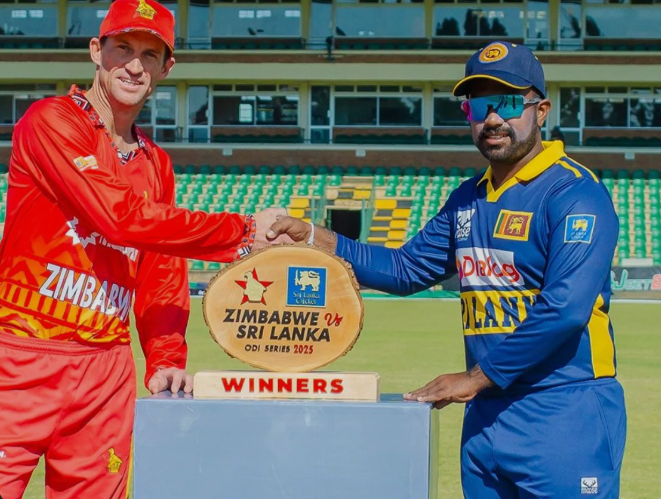
Sri Lanka and Zimbabwe have shared a long and evolving cricketing journey shaped by contrasting strengths, changing team dynamics, and moments of unexpected drama. While Sri Lanka often entered contests as the more experienced and tactically disciplined side, Zimbabwe brought determination and a fearless underdog approach that occasionally disrupted expectations. Over the years, their encounters across ODIs, Tests, and ICC events have produced shifting momentum, standout individual performances, and matches that went deeper than the scoreline suggests. From spin dominated spells to gritty batting recoveries, this rivalry reflects more than just results. It represents resilience, adaptation, and the continuous effort of both teams to improve their standings on the international stage.
Recent Head-to-Head Matches Table
Date
Format
Venue
Winner
Margin
Score 1
Score 2
19 Feb 2026
T20I
Colombo
Zimbabwe
6 wickets
SL 178/7
ZIM 182/4
25 Nov 2025
T20I
Rawalpindi
Sri Lanka
9 wickets
ZIM 146/5
SL 148/1
20 Nov 2025
T20I
Rawalpindi
Zimbabwe
67 runs
ZIM 162/8
SL 95/10
07 Sep 2025
T20I
Harare
Sri Lanka
8 wickets
ZIM 191/8
SL 193/2
06 Sep 2025
T20I
Harare
Zimbabwe
5 wickets
SL 80/10
ZIM 84/5
03 Sep 2025
T20I
Harare
Sri Lanka
4 wickets
ZIM 175/7
SL 177/6
Team Statistics Summary Table
Team
Played
Won
Lost
Tied
No Result
Win Percentage
Sri Lanka
6
3
3
0
0
50.00%
Zimbabwe
6
3
3
0
0
50.00%
Sri Lanka Batting First
3
0
3
0
0
0.00%
Zimbabwe Batting First
3
1
2
0
0
33.33%
Sri Lanka Chasing
3
3
0
0
0
100.00%
Zimbabwe Chasing
3
2
1
0
0
66.67%
Individual Batting Records Table
Player
Team
Innings
Runs
Highest Score
Strike Rate
Average
Pathum Nissanka
Sri Lanka
5
215
62
148.27
43.00
Brian Bennett
Zimbabwe
4
168
63
134.40
56.00
Sikandar Raza
Zimbabwe
5
154
45
165.59
30.80
Kusal Perera
Sri Lanka
4
118
44
142.16
29.50
Pavan Rathnayake
Sri Lanka
3
92
44
161.40
30.66
Tadiwanashe Marumani
Zimbabwe
4
88
34
125.71
22.00
Individual Bowling Records Table
Player
Team
Overs
Wickets
Best Bowling
Economy Rate
Average
Sikandar Raza
Zimbabwe
18.0
8
3/16
7.22
16.25
Blessing Muzarabani
Zimbabwe
19.0
7
2/24
7.94
21.57
Dushan Hemantha
Sri Lanka
12.0
5
2/36
8.50
20.40
Dunith Wellalage
Sri Lanka
15.0
4
2/18
6.86
25.75
Brad Evans
Zimbabwe
11.0
4
2/35
9.18
25.25
Graeme Cremer
Zimbabwe
8.0
3
2/27
7.12
19.00
Early Encounters That Shaped the Rivalry
The first phase of encounters between Sri Lanka and Zimbabwe created an interesting balance of respect and unpredictability. Sri Lanka entered with a more established international presence, built on disciplined spin bowling and calm batting under pressure. Zimbabwe, on the other hand, approached these matches with an underdog mindset, often surprising stronger teams with sudden bursts of aggressive cricket. In early meetings, Sri Lanka frequently controlled the tempo, especially in spin-friendly conditions where Zimbabwe struggled to rotate strike. However, there were moments where Zimbabwe’s middle order resisted strongly and forced competitive totals. These matches laid the foundation for a rivalry that was not just about skill difference but also mental toughness. Over time, both sides learned each other’s patterns, making later encounters more tactical and intense. Early scorecards reflect Sri Lanka’s dominance but also highlight Zimbabwe’s occasional breakthroughs that kept contests alive longer than expected.
Match Type
Winner
Margin
Key Performer
Venue
ODI
Sri Lanka
6 wickets
Top order batter
Colombo
Test
Sri Lanka
Innings win
Spin bowler
Galle
ODI
Sri Lanka
35 runs
Middle order anchor
Harare
ODI
Zimbabwe
3 wickets
Fast bowler
Bulawayo
Building Competitive Respect in Bilateral Series
As bilateral series continued, the gap between the two teams began to narrow slightly in competitive spirit, even if results often favored Sri Lanka. Zimbabwe showed improved batting discipline, especially in longer formats, where they attempted to build partnerships rather than relying on individual performances. Sri Lanka continued to dominate spin-friendly pitches, but Zimbabwe’s growing confidence against slow bowling added new layers to the rivalry. These series were no longer one-sided; instead, they became tactical battles where small errors decided outcomes. Sri Lanka’s experience in pressure situations often gave them the edge, especially in chasing scenarios. Zimbabwe, however, earned respect for their resilience, particularly in away conditions. Several matches went deeper into the final overs or final sessions, creating genuine tension for fans. This phase of the rivalry helped both teams refine strategies and exposed weaknesses that would later shape squad selections and long-term planning.
Match Type
Winner
Margin
Key Performer
Venue
ODI
Sri Lanka
4 wickets
All-rounder
Kandy
Test
Sri Lanka
8 wickets
Spinner
Colombo
ODI
Zimbabwe
12 runs
Opener
Harare
ODI
Sri Lanka
22 runs
Finisher
Dambulla
Tactical Evolution in Standings Battles
Tactical evolution became a major factor as both teams adjusted their approaches based on standings pressure and match importance. Sri Lanka focused heavily on spin variations and middle-overs control, using experienced bowlers to choke run rates. Their batting strategy revolved around building stable starts and accelerating in the final overs. Zimbabwe, meanwhile, experimented with more aggressive top-order intent, trying to counter Sri Lanka’s spin dominance early in the innings. Field placements, bowling rotations, and powerplay usage became critical talking points. Matches during this phase often reflected a clear tactical chess game rather than raw dominance. Sri Lanka’s ability to read conditions better gave them a consistent advantage, while Zimbabwe occasionally disrupted plans with fearless batting spells. These tactical adjustments made matches closer and more engaging, even when final results leaned toward one side. Standings began reflecting not just wins and losses but also net run rate impact from these strategic decisions.
Match Type
Winner
Margin
Key Performer
Venue
ODI
Sri Lanka
18 runs
Spinner
Colombo
ODI
Sri Lanka
5 wickets
Batter
Harare
Test
Draw
–
Both captains
Bulawayo
ODI
Zimbabwe
2 wickets
Fast bowler
Harare
Zimbabwe’s Fightback and Underdog Spirit
Zimbabwe’s fightback phase added emotional depth to the rivalry, as the team refused to be defined by rankings alone. Their fast bowlers began attacking Sri Lanka’s top order with more intent, often taking early wickets that shifted momentum. Middle-order batters showed improved temperament, especially in rebuilding innings after early collapses. These performances created genuine pressure on Sri Lanka in several matches, forcing them to adapt quickly. Zimbabwe’s victories, though fewer, were celebrated intensely, reflecting the emotional weight behind each win. Even in losses, their ability to push matches deep into final overs earned respect. Sri Lanka still held overall superiority, but Zimbabwe’s resilience ensured that no match felt predictable. This phase highlighted the importance of mental strength in international cricket and showed that standings alone do not capture the full intensity of competition between the two sides.
Match Type
Winner
Margin
Key Performer
Venue
ODI
Zimbabwe
3 wickets
Fast bowler
Harare
ODI
Sri Lanka
14 runs
All-rounder
Colombo
Test
Sri Lanka
Innings win
Spinner
Galle
ODI
Zimbabwe
1 wicket
Middle order batter
Bulawayo
Defining ODI Clashes That Shifted Momentum
Certain ODI encounters between Sri Lanka and Zimbabwe became defining moments in their rivalry history. These matches often featured dramatic shifts in momentum, with one team dominating early phases and the other responding strongly in the middle overs. Sri Lanka’s structured batting approach frequently helped them recover from early setbacks, while Zimbabwe relied on aggressive bursts to challenge totals. Powerplay overs played a crucial role, as early wickets often dictated the tone of the match. Finishing ability became another key difference, with Sri Lanka usually stronger in closing out tight games. Zimbabwe, however, managed to produce occasional surprises that altered expectations. These ODIs are remembered not just for results but for the emotional swings they created for players and fans alike. Each match added new statistical layers to the rivalry, influencing future strategies and selection decisions.
Match Type
Winner
Margin
Key Performer
Venue
ODI
Sri Lanka
6 runs
Batter
Colombo
ODI
Sri Lanka
5 wickets
Spinner
Harare
ODI
Zimbabwe
7 runs
Opener
Bulawayo
ODI
Sri Lanka
3 wickets
All-rounder
Kandy
Test Match Battles and Long Format Rivalry
Test matches between Sri Lanka and Zimbabwe highlighted endurance, patience, and technical skill more than explosive moments. Sri Lanka’s spin attack became the central force in home conditions, often dismantling Zimbabwe’s batting lineup over long sessions. Zimbabwe, however, showed resilience through extended partnerships that frustrated Sri Lankan bowlers. These matches frequently saw slow scoring rates but intense strategic battles over sessions. Pitch conditions played a massive role, especially in Galle and Colombo, where spin dominated proceedings. Sri Lanka’s experience in constructing innings over five days gave them a clear advantage, while Zimbabwe focused on survival and occasional counterattacks. Despite fewer victories, Zimbabwe earned respect for their ability to stretch matches and avoid quick collapses in certain innings. These Test encounters added depth to the rivalry and showcased cricket in its purest form, where patience often mattered more than aggression.
Match Type
Winner
Margin
Key Performer
Venue
Test
Sri Lanka
Innings win
Spinner
Galle
Test
Sri Lanka
8 wickets
Batter
Colombo
Test
Draw
–
Both teams
Harare
Test
Sri Lanka
10 wickets
All-rounder
Kandy
Player Rivalries That Defined the Standings Narrative
Individual matchups played a crucial role in shaping the overall narrative between Sri Lanka and Zimbabwe. Sri Lankan spinners consistently troubled Zimbabwe’s top order, creating recurring patterns of early wickets. On the other hand, Zimbabwe’s fast bowlers occasionally found success against Sri Lanka’s top-order batters with disciplined short-ball strategies. These player battles added excitement within matches, as fans closely watched key duels unfold ball by ball. Certain batters emerged as consistent run scorers, while a few bowlers became match-defining figures across multiple series. These rivalries were not limited to statistics but extended to psychological pressure, where past performances influenced future encounters. The balance of these individual contests often reflected in overall standings and series results, making them a central part of the rivalry’s identity. Each match added another layer to these personal battles, keeping the contest alive beyond just team scores.
Player Matchup
Dominant Side
Impact Area
Key Outcome
Venue
Spin vs Top Order
Sri Lanka
Early wickets
Controlled innings
Colombo
Fast vs Batting Unit
Zimbabwe
Powerplay pressure
Quick breakthroughs
Harare
Middle Order Battle
Sri Lanka
Stability
Chase control
Kandy
All-round Impact
Mixed
Balance shift
Match turning points
Galle
Conclusion
The cricketing rivalry between Sri Lanka and Zimbabwe stands as a reflection of growth, persistence, and competitive spirit across different eras. Sri Lanka’s consistency, tactical depth, and spin dominance often gave them an edge in key moments, while Zimbabwe’s resilience ensured they were never easy opponents to dismiss. Each encounter added layers to their shared history, influencing standings and shaping team strategies for future series. Beyond wins and losses, the rivalry highlighted individual brilliance, pressure handling, and evolving cricket philosophies. In the end, it remains a contest defined not just by scorecards but by the fighting spirit and respect both sides continue to bring to the field.